Setting your pantry and fridge up for success
When the shelves are right, the healthy choice quietly becomes the easy one.
8 minute read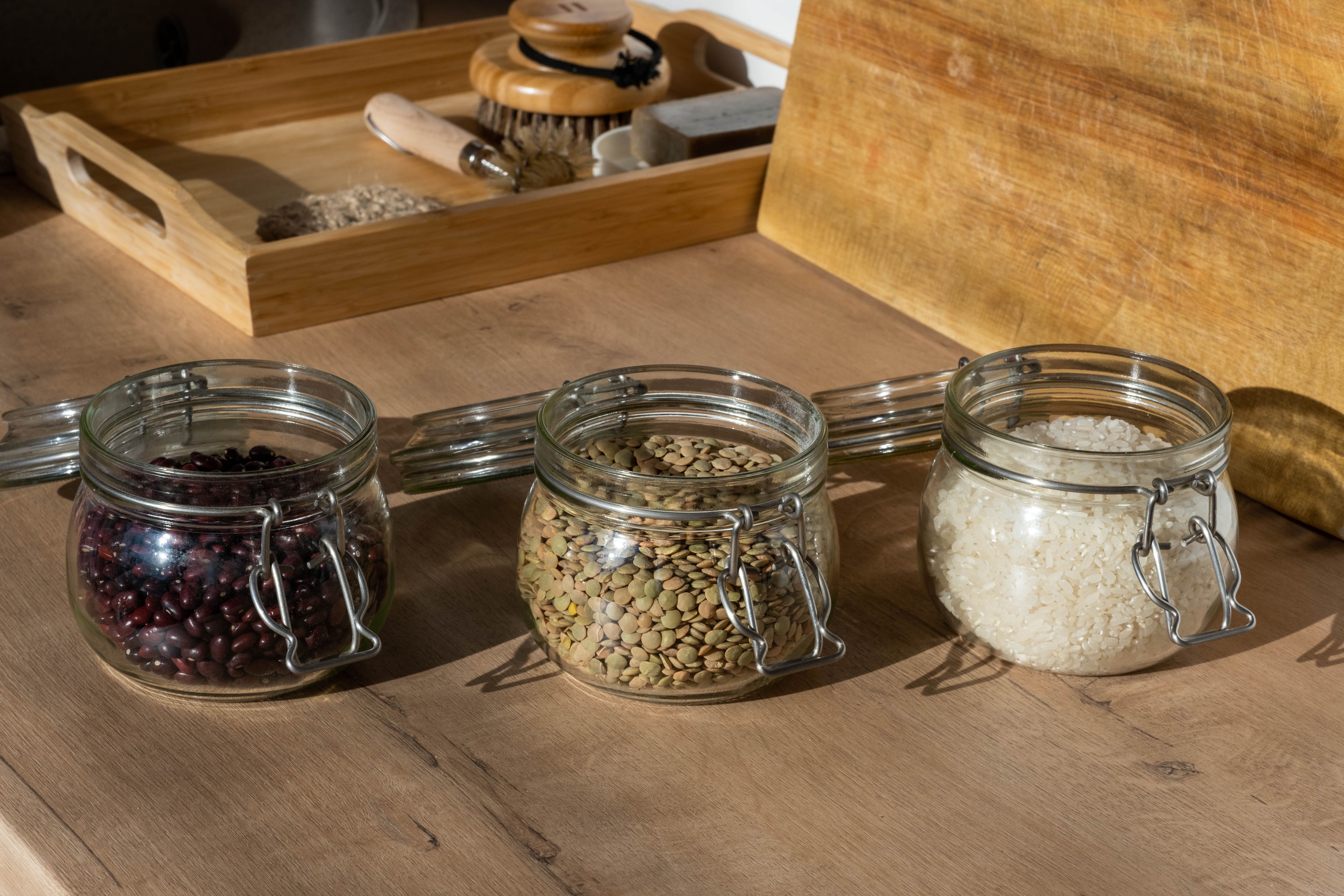
The short version
- A good kitchen is not about willpower. Stock it well and the easy meal is also the nourishing one.
- Start with a reset: clear, see what you have, and group like with like so nothing hides at the back.
- Keep a core of pantry staples and a few fridge and freezer basics that combine into dozens of meals.
- Learn a handful of flavour bases — garlic and olive oil, ginger and soy, cumin and lemon — and you can cook from almost anything.
- Set it up around your real life and your stage, whether that is pregnancy, the newborn weeks, or feeding a hungry family.
Most of us think eating well is a matter of motivation. In practice, it is mostly a matter of what is within reach when you are tired, hungry and short of time. This is the idea at the heart of our nutrition service, Nourish at Home: rather than hand you a rigid plan or batch cook for you, we set the kitchen up so that the simplest thing to reach for is also a good one. Get the pantry and fridge right, and half the day's decisions are already made.
Why the pantry is the quiet hero
Fresh food comes and goes, but your store cupboard is the steady backbone underneath it. A handful of dried lentils, a tin of tomatoes and an onion is already a meal. That same cupboard is what turns a sad-looking half-courgette and the last of a bag of spinach into something worth eating, rather than something you scrape into the bin. It is what lets you cook on the nights you had no plan — which, with a baby in the house, is most of them.
It also quietly shapes what you eat. When the easiest thing to grab is a wholegrain and a tin of beans, that is what dinner tends to become. The work is done once, at the shelf, instead of every evening at the stove.
Start with a reset
Before you buy anything, take everything out. It sounds dramatic, but you cannot set up a space you cannot see. Pull it all onto the counter, give the shelves a wipe, and be honest about what is actually there.
- Check and let go. Bin anything truly past it, and move the half-used jars and lonely tins to the front to use up first.
- Group like with like. Grains together, tins together, baking in one place, snacks in another. You stop buying a fourth bag of rice when you can see the three you have.
- Decant the things you use most into clear jars so you can see at a glance when you are running low. It is not about a perfect shelf for a photograph; it is about never finding the pasta after the water has boiled.
- Put a small basket at the front for the odds and ends that need using, and treat it as your first stop when you cook.
Do the same with the fridge and freezer. The aim is simple: everything visible, everything in a home, nothing rotting quietly at the back.
The pantry must-haves
You do not need a hundred ingredients. You need a dependable core that combines in endless ways. These are the staples we come back to again and again on a Pantry Reset, because they do the most work for the least money and effort.
The base of a meal
- Tinned tomatoes — the start of sauces, soups, stews and shakshuka
- Tinned and dried pulses — chickpeas, butter beans, cannellini and red lentils, for protein, fibre and bulk
- Grains — rice, oats, and a quick-cooking grain such as couscous or bulgur
- Dried pasta and noodles — the fastest meal in the house
- Tinned fish — tuna, salmon and sardines, for instant protein and omega-3s
The things that make it taste good
- A good olive oil for cooking and for finishing
- Acid — red wine, cider and balsamic vinegars, plus lemons (more on why below)
- Salty depth — soy or tamari, stock cubes or paste, and a jar of mustard
- A core spice set — cumin, smoked paprika, ground coriander, cinnamon, chilli flakes and good black pepper
- Aromatics that keep — onions, garlic and, if you can, a knob of ginger
- Nuts, seeds and nut butter — for snacks, texture and a quick protein lift
- Honey or maple — a little sweetness to balance a dressing or sauce
Notice how few of these are perishable. The pantry is where it pays to invest, because, unlike anything fresh, it waits patiently for you.
The fridge and freezer basics
If the pantry is the backbone, the fridge and freezer are where freshness and speed live. You do not need it full; you need it considered.
Fridge
- Eggs — arguably the most useful thing you can own, breakfast to dinner
- Dairy or alternatives — plain yoghurt (brilliant in both sweet and savoury), milk, a hard cheese and a feta or halloumi
- A couple of dependable vegetables — carrots, a leafy green, a bag of salad, plus whatever is in season
- Fresh herbs — even one pot of soft herbs lifts a simple plate
- A jar of something punchy — olives, capers, kimchi, harissa or pesto, to add instant interest
Freezer
- Frozen vegetables — peas, spinach, sweetcorn and stir-fry mixes are as nutritious as fresh and never wilt
- Frozen fruit and berries — for smoothies, porridge and quick puddings
- A protein or two — chicken, white fish or a bag of prawns
- Bread and wraps — sliced and frozen, toasted straight from cold
- Your own leftovers — a few portions of sauce or soup, labelled, for the night you cannot face cooking
Let us reset your shelves with you
The Pantry Reset is part of our in-home nutrition service. It begins with a free, no-obligation discovery call to understand your kitchen, your stage and your real life.
Book a discovery callFlavour pairings that always work
Here is the insight that turns a stocked cupboard into actual dinners: you do not cook ingredients, you cook combinations. A few reliable flavour bases will carry you through almost any meal. Choose one, build around it, and the dish more or less directs itself.
- Garlic, onion and olive oil — the Mediterranean starting point for soups, pasta and roast vegetables. Finish with lemon and herbs.
- Ginger, garlic and soy — the East Asian base for stir-fries, noodle bowls and dressings. A little honey and chilli rounds it out.
- Cumin, coriander and lemon — warm and bright, for lentils, roasted vegetables, chickpeas and anything Middle Eastern.
- Tomato, garlic and dried herbs — the Italian backbone for sauces, bakes and beans on toast that taste like more.
- Smoked paprika, garlic and tomato — smoky and rich, for stews, eggs and roasted potatoes.
The other thing professional kitchens know, and home cooks often miss, is balance. Almost any dish improves when you think about four things: salt (stock, soy, cheese), fat (oil, yoghurt, nuts), acid (lemon, vinegar) and a touch of sweetness (honey, roasted vegetables, a tin of tomatoes). If something tastes flat, it is almost always missing acid or salt. A squeeze of lemon at the end is the cheapest upgrade in cooking.
You do not need a recipe for every meal. You need a base, a balance and a full enough shelf to improvise.
Pairings worth keeping in your back pocket: lemon with anything green or fishy; yoghurt to cool anything spiced; chilli and honey together; tomato with basil and with cumin equally happily; nuts or seeds scattered over almost anything for crunch.
Building a meal from the shelf
Once the shelves are right, dinner becomes a simple formula rather than a daily puzzle. Pick one from each line and you have a meal:
- A base — pasta, rice, grains, bread or potatoes
- A protein — tinned beans or fish, eggs, frozen chicken, yoghurt or cheese
- A vegetable — fresh, frozen or tinned, whatever needs using
- A flavour base — one of the combinations above
- A finish — lemon, herbs, a scatter of nuts, a spoon of yoghurt
Beans, tinned tomatoes, garlic and pasta. Eggs, frozen spinach, feta and bread. Rice, tinned salmon, frozen peas, ginger and soy. None of these needs a plan, only a cupboard that is ready.
Setting it up for your stage
The right kitchen looks different depending on where you are, and this is exactly what we tailor on a home visit. In pregnancy, when energy and appetite swing, lean on iron-rich and easy options: lentils, tinned fish, oats, frozen fruit and plenty of one-handed snacks for the days when, as we wrote in what to eat when nothing appeals, even toast is a negotiation.
In the fourth trimester, the whole game is food you can eat with one arm full of baby: a freezer holding a few batch-cooked meals, a basket of snacks worth keeping in, and a pantry organised so a partner or visitor can throw something together without having to ask where anything is. For a family, it is about cooking once and feeding everyone, with a base flexible enough to please a toddler and a grown-up from the same pan.
A small habit that holds
Keep a running list on the fridge or your phone and add to it the moment something runs out, not on shopping day when you are trying to remember. A pantry only stays useful if it gets topped up before it empties.
Pantry and fridge, answered
What are the must-have pantry staples for healthy family meals?
A reliable base is tinned tomatoes and beans or lentils, a couple of grains such as rice and oats, dried pasta, good olive oil, a few vinegars, stock, tinned fish, nuts and seeds, and a small set of spices. With those in, you can build a balanced meal from almost anything fresh you have to hand.
How should I organise my fridge so food does not get wasted?
Give the fridge simple zones: an eat-me-first basket at eye level for things to use up, dairy and cooked food on the cooler middle and upper shelves, raw meat and fish on the bottom shelf, and vegetables in the drawers. Keeping the most perishable food in sight is the single biggest way to cut waste.
What flavours go together for quick, everyday cooking?
A few dependable bases carry most meals: garlic, onion and olive oil for Mediterranean dishes; ginger, garlic and soy for East Asian; cumin, coriander and lemon for Middle Eastern; and tomato, garlic and herbs for Italian. Start a dish with one of these and you rarely go wrong.
How do I stock a pantry for pregnancy and the early weeks with a baby?
Lean on iron-rich and easy-to-eat foods that need little effort: tinned beans and lentils, tinned fish, oats, frozen vegetables and fruit, nuts and nut butters, and a few batch-cooked meals in the freezer. One-handed snacks and meals you can reheat matter more than anything elaborate.
What is a Pantry Reset with Nourish at Home?
The Pantry Reset is part of our Nourish at Home nutrition service. A registered nutritional therapist looks through what you already keep in, suggests easy swaps that make the healthy choice the simple one, and helps you set up your shelves and fridge so good meals come together without a plan you will never keep. It starts with a free, no-obligation discovery call.
This is general guidance to help you set up your kitchen, not personalised nutrition or medical advice. If you have specific dietary needs, a health condition, or any concerns during pregnancy or after birth, please speak to your midwife, GP or a registered professional.
A kitchen that works for you, set up with you.
Our registered nutritional therapists come to your home, look at what you already have, and make the small changes that stick. It begins with a free, no-obligation discovery call.
Book a discovery call